Categories
Inside Church Worldwide

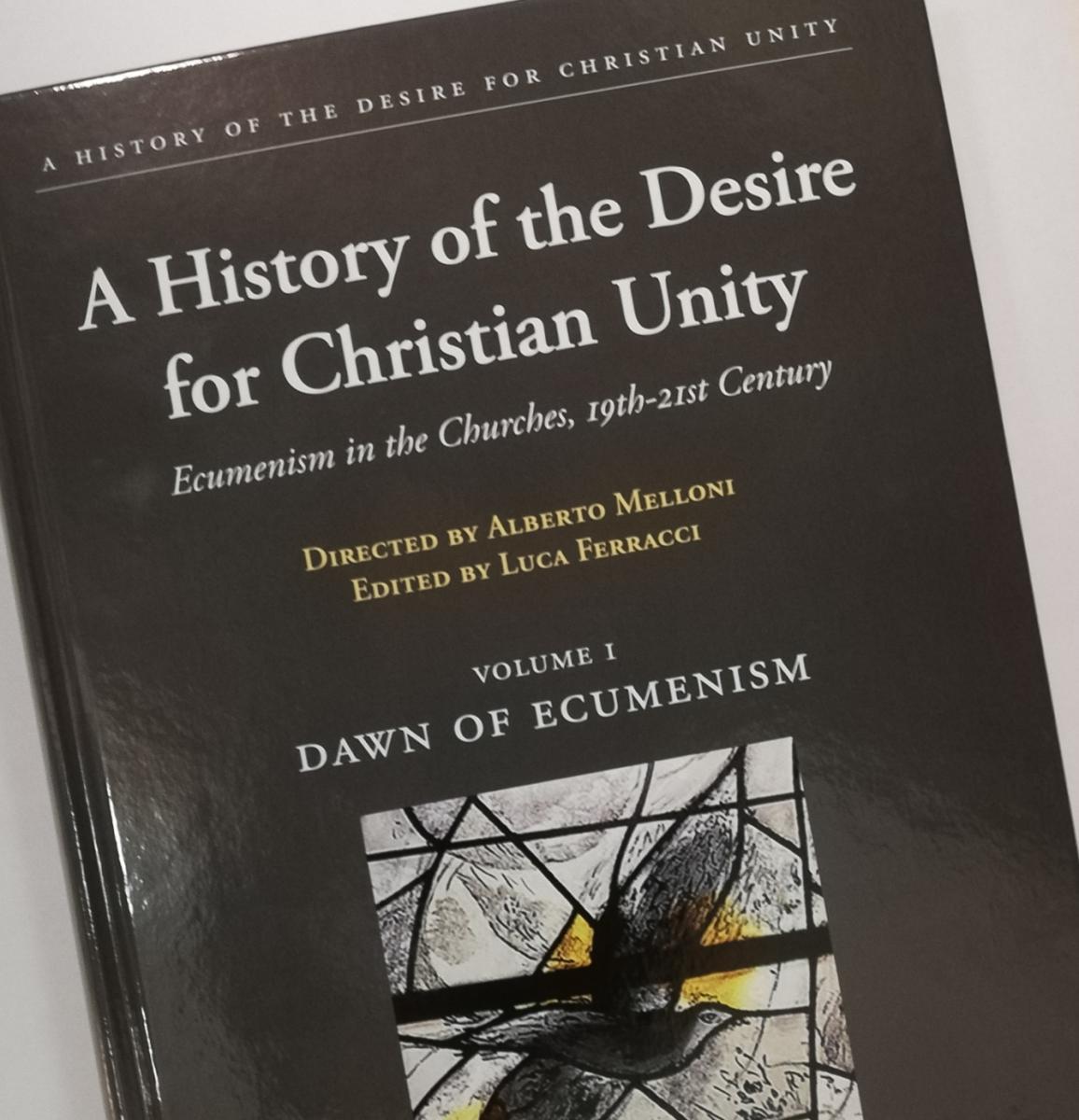
Newly published volume explores historic roots of desire for Christian unity

The volume was presented by Prof. Alberto Melloni, the director of the project, and Dr Luca Ferracci, the editor of the history, of the Foundation for Religious Studies in Bologna, at the webinar organized by the World Council of Churches (WCC) during the Week of Prayer for Christian Unity, observed 18-25 January.
This first volume traces the long-term roots of ecumenism from the 19th century and into the heart of the 20th.

In an opening greeting at the 19 January webinar, WCC acting general secretary Rev. Prof. Dr Ioan Sauca shared how much he appreciated and welcomed the project.

Click here to read more.

Categories
In The News

Free State leads the pack with 85.7% pass rate

The Free State has recorded the highest number of learners who passed their 2021 National Senior Certificate (NSC) exams, while Gauteng and KwaZulu-Natal produced more candidates who are eligible to apply for a Bachelor’s degree programme at universities.

Basic Education Minister, Angie Motshekga, revealed this during the much-awaited 2021 matric results announcement on Thursday evening.  

The 2021 NSC examination results show that only one province achieved lower than the 70% pass rate, while five performed above 70%, and three attained above 80%.

While COVID-19 may have impacted the academic programme, the Class of 2021 managed to bag an overall pass rate of 76.4% – an increase of 0.2 percentage points compared to the 2020 matric pass rate of 76.2%.

The Free State clinched the number one spot for three years in a row after 85.7% of learners passed in the province – an improvement of 0.6% from 2020.

The province is followed by Gauteng with 82.8%, Western Cape 81.2%, North West 78.2%, KwaZulu-Natal 76.8%, Mpumalanga 73.6%, Eastern Cape 73% and Northern Cape 71.4%.

Limpopo is the only province that obtained less than 70%, with the pass rate sitting at 66.7%.

Categories
Inside Church Media Room

SACC calls for national dialogue on foreign nationals

The South African Council of Churches (SACC) is calling for a National Dialogue on foreign nationals working in South Africa, who have once again come under the societal microscope. This call comes in the wake of other members of society who are publicly calling for the removal of all foreign nationals from South Africa ‘with immediate effect’. “The challenge of addressing the South African attitude to Africans from other countries is a perennial one. The problems of relating to foreign nationals have a direct impact on the communities in which we live, worship and where we have our livelihoods; and we urgently need a national multi-stakeholder and solution-seeking Indaba”, said Bishop Mpumlwana General Secretary of the SACC.

The murmurings about foreign nationals ‘stealing the jobs’ earmarked for local nationals have been growing in mass for years, albeit at varying volumes. In recent months, we’ve seen the transport sector buckling under the weight of the strain of local drivers’ disgruntlement at the employment of foreign nationals over them. It was not long ago that the N3 was blockaded by protesting drivers, creating a ripple effect to the broader economy.

Today, there are voice notes doing the rounds giving deadlines for the removal of mainly Africans from elsewhere in the continent; and in Johannesburg there is the much more organised “Operation Dudula”; and more recently, the EFF put the spotlight on the hospitality industry, making visits to restaurants to establish the nationalities and ratios of their staff compliments.

The government appears to lack the capacity to deal with this matter in a sustainable way – and this has continued to plague communities, resulting in much bitterness, fear, anxiety and conflict.

Given the spread of organised groups taking the initiative to accost foreign nationals, whether legal or illegal, as the distinction is hard to verify in the heat of the moment, the SACC is deeply concerned that it would take one misplaced word or act by one or more persons, to tip these murmurings to violence and, God-forbid – death.

It is for this reason that the SACC proposes a national Indaba to include all sectors that have an interest in this matter, including the representative bodies of foreign nationals; for all to look into various issues concerning foreign nationals in the country.

These should include the whole question of immigration management and the refugee status regime. It should include the consideration of any research made on the activities attributable to foreign nationals – their presumed role in regular crime and especially organised and syndicated crime like in drugs and human trafficking; their contribution to the national economy and the GDP; their contribution to education, including as university professors; the labour and employment situation regarding foreign nationals – this being one of the triggering points in communities in a high unemployment environment.

“We need to look at the difference between poor and middle-class immigrants, legal or not; is it a class thing? Are foreigners objectionable when they are poor and in townships, and not so when they are middle class in suburbs, or are white from, say the Czech Republic?” added Bishop Mpumlwana. He said that it is important to ask what causes the backlog with documentation processes for foreign nationals, and what the role of corruption could be at the borders or in the Reconstruction and Development Programme (RDP) house allocation that inordinately favours illegal foreigners.

Furthermore, considering the large numbers from neighbouring countries like Lesotho, Mozambique and Zimbabwe, how does the South African economy relate to the regional and continental economy, both historically and in the present context? What might be some of the solutions – at community level, at municipal level, sectorally as in types of businesses such as informal commerce, trucking of goods; government and public policy – immigration management, regulation of business enterprises; categorisation even of faith-based businesses. What might be some of the solutions?

“We have a responsibility to ourselves to foster a culture of dialogue that will result in meaningful solutions, which is why this proposed Indaba is a national priority,” said Bishop Malusi Mpumlwana. He acknowledged that our tumultuous past had resulted in much deprivation, and an imbalanced competition for jobs, commodities and housing, but stated that the forced and violent removal of foreign nationals would not a peaceful South Africa make.

“We must appeal to all our communities to desist from what ends up as vigilante action in the absence of effective law enforcement. We saw the effect of people taking the law into their own hands in the fatal vigilante actions of Phoenix; whatever the cause, and however well intentioned, nothing stops popular action against a section of the population from becoming ugly and resulting in serious injury and death,” Mpumlwana added.

The National Indaba on Foreign Nationals will aim to create a fair playing field, and address every area of concern for all affected sectors and communities; and seek solutions, where the rules that apply for one can be applied to all, for the benefit of South Africa and all who live in it.

Photo: Albin Hillert/WCC

Categories
Inside Church Worldwide

COVID-19 brought “openness to being transformed ourselves,” WCC acting general secretary reflects

“In the two years since the pandemic started, the World Council of Churches has, while mostly working remotely, reoriented its work to equip the world’s churches to address the healthcare and pastoral challenges posed by the pandemic and to minister in the presence of illness, death, and enormous disruption,” he said. “Since churches and the WCC are historically heavily identified with health and healing, a Ministry Support Team was assembled to field the many pastoral questions and concerns that have arisen in local and regional settings.”

Click here to read more.

Photo: Albin Hillert/WCC

Categories
Inside Church Media Room Worldwide

Symposium on Role of Religion and Faith-Based Organizations in International Affairs will push to combat racism

Speakers will explore the urgent need to transform our world, exposing and redressing the systemic injustices of racism, colonialism and slavery that continue to pervade all aspects of society – local, national and international.

For Dr Ryan Smith, World Council of Churches programme executive for the Ecumenical Office to the United Nations in New York, this year’s Symposium will be “a great opportunity to bring the voices of the faith community, governments and the United Nations (UN) system together to highlight work that has been done and work that needs to continue to eradicate systemic racism and reshape the future.”

Click here to read more.

Photo: Marcelo Schneider/WCC

Photo: GCIS

Categories
In The News Media Room

NCCC considering way forward on National State of Disaster

President Cyril Ramaphosa says the National Coronavirus Command Council (NCCC) is considering whether or not the country will continue with the National State of Disaster legislation currently in place.

The National State of Disaster was declared by Cooperative Governance and Traditional Affairs (COGTA) Minister, Dr Nkosazana Dlamini Zuma, as a response to the onset of the COVID-19 pandemic in March 2020,nearly two years ago.

“We are examining how best we should handle the state of disaster in this period where the infections have tapered down and to see the efficacy of using the State of Disaster legislation or utilising other measures.

“The National Coronavirus Command Council is examining exactly that to see whether we can use health protocols, health regulations to move forward in our management of this pandemic,” President Ramaphosa said.

Click here to read more.

Photo: GCIS

Categories
Inside Church

WCC acting general secretary to participate in panel on “Ecumenism and Pandemic”

Hosted by the Institute for Ecumenical Studies of Angelicum University, the event will also be attended by all students currently attending the WCC Bossey Ecumenical Institute.

After an introductory greeting by Cardinal Kurt Koch, president of the Pontifical Council for Promoting Christian Unity, Bishop Brian Farrell, secretary of the council, will present a working paper entitled “Ecumenism in a Time of Pandemic: From Crisis to Opportunity” prepared on the basis of a survey amongst the episcopal conferences.

Click here to read more.

WCC acting general secretary Rev. Prof. Dr Ioan Sauca. Photo: Grégoire de Fombelle/WCC

Categories
In The News

Over 4 000 new COVID-19 cases recorded in SA

A total of 40 654 COVID-19 tests have been conducted, with 4 322 new cases being identified in South Africa in the last 24 hours.

This brings the total number of laboratory-confirmed cases to 3 568 900.

In a statement on Wednesday, the National Institute for Communicable Diseases (NICD) said this increase represents a 10.6% positivity rate.

Due to the ongoing audit exercise by the National Department of Health (NDoH), the institute said there may be a backlog of COVID-19 mortality cases reported.

The Department of Health said 156 deaths have been reported and of these, 36 occurred in the past 24 – 48 hours, and this brings the total fatalities to 93 707 deaths to date.

Read more:

Photo: Unsplash

Categories
Inside Church

SACBC Plenary 2022: Nuncio and President’s address

On the second day of the Pleanary in the morning session there were addresses from the president of the Conference, Bishop Sithembele Sipuka; an address from the Apostolic Nuncio, Archbishop Peter Wells; and report from the secretary general of SACBC, Fr Hugh O’Connor.

SACBC President, Bishop Sithembele Sipuka, said the meeting provided the bishops with an opportunity to reflect about the Church and the signs of the time in the world which they are called to discern their message. Further on he noted with some relief also the usual pastoral programmes of the parishes that are gradually resuming, and people recommencing their Sunday Mass attendance, and other activities of the Church.

Click here to read more.

Photo: Archbishop Peter Wells, the Apostolic Nuncio

Categories
Inside Church Testimonies

US bishops urge Americans to follow Martin Luther King’s prophetic witness

The United States is celebrating Martin Luther King Jr. Day, which since 1983 has been observed on the third Monday of January to commemorate the Civil Rights leader’s life and legacy.

In a statement for the observance, the president of the U.S. Conference of Catholic Bishops (USCCB), Archbishop José H. Gomez of Los Angeles, has called on all people of goodwill to follow his prophetic witness of nonviolence and fraternity.

He said the prominent activist should be remebered not only for the justice he pursued, but for “how he pursued it.”

Click here to read more.

Photo: Unsplash