Categories
In The News

Floods detail the effect of climate change

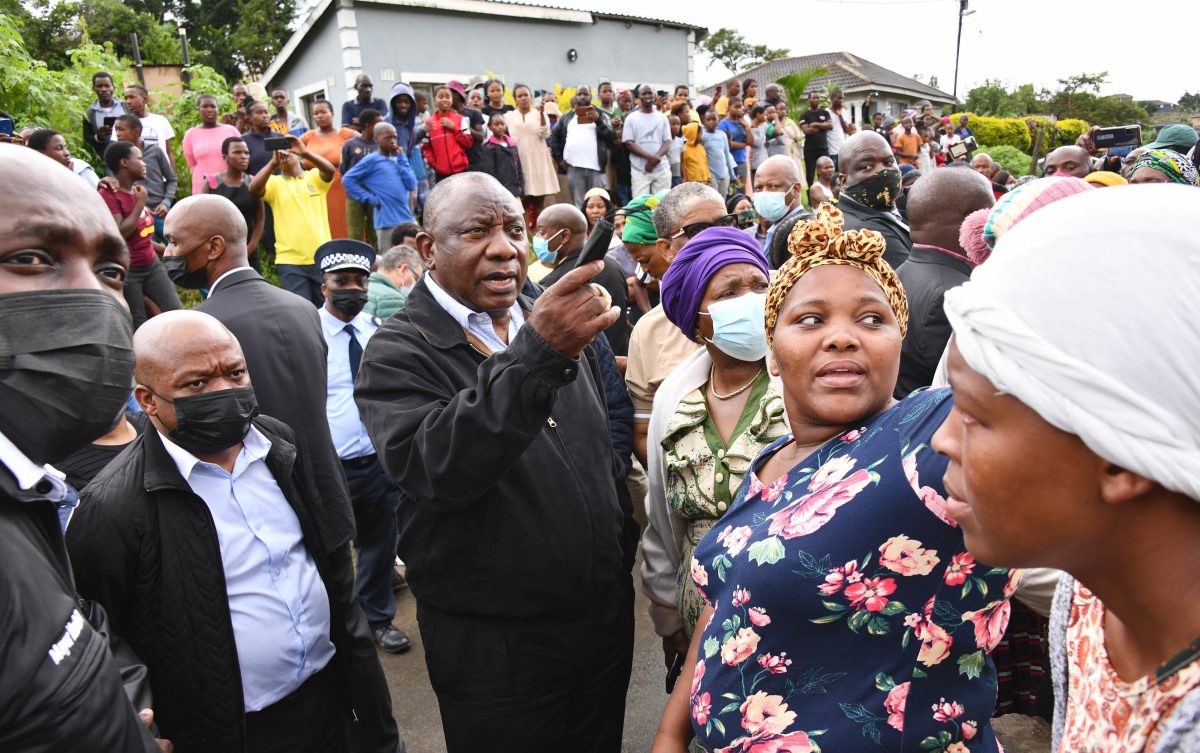
The devastating floods in KwaZulu-Natal and other parts of the country are the beginnings of South Africa feeling the effects of climate change, says Cooperative Governance and Traditional Affairs (COGTA) Minister, Dr Nkosazana Dlamini Zuma.

Addressing reporters on Tuesday, the Minister said the torrential rain experienced in the province last week were the worst the country had ever experienced.

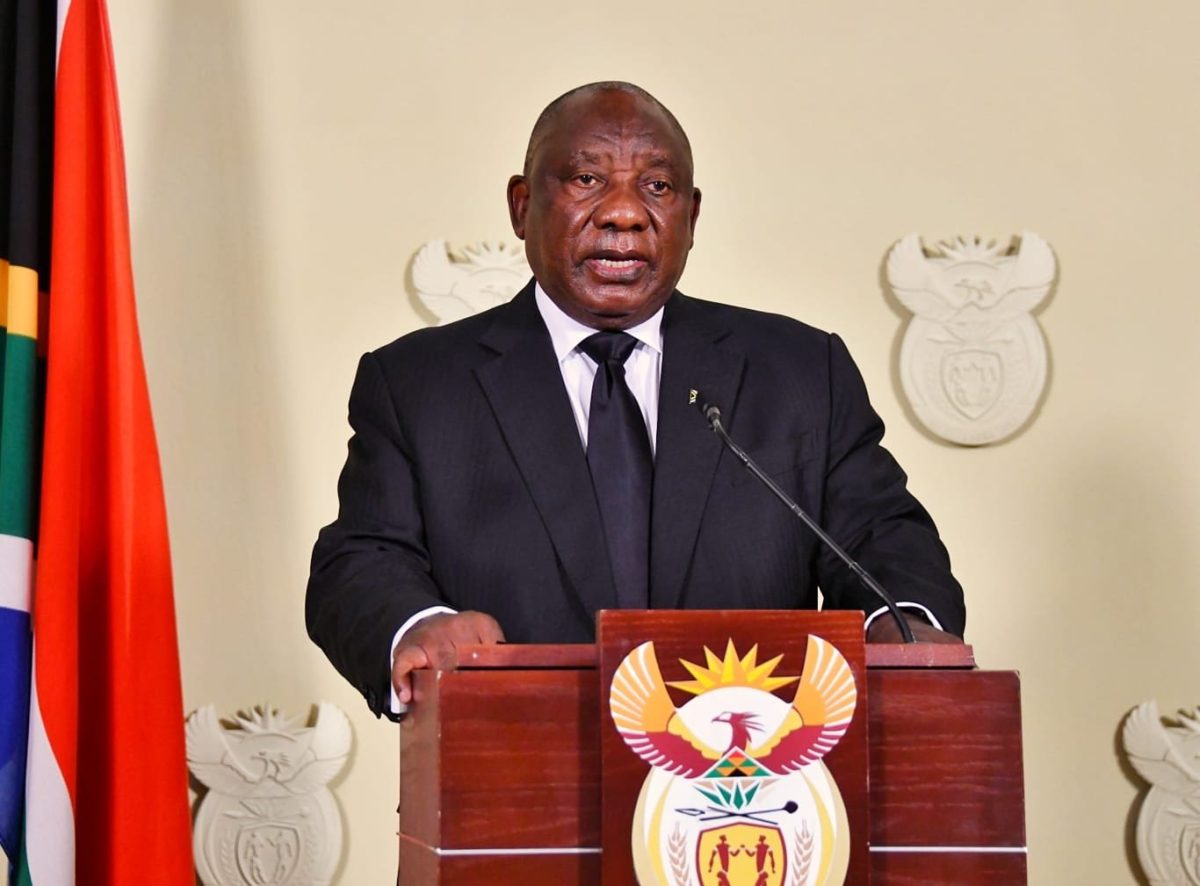
On Monday night, President Cyril Ramaphosa announced Cabinet’s decision to declare a National State of Disaster. The declaration of the National State of Disaster takes into account the need to augment existing measures undertaken by organs of state to deal with the national disaster and allows the mobilisation of resources to support the various interventions.

Click here to read more.

Photo: GCIS

Categories
Inside Church

“Church, Mission, and the Bonds of Koinonia” will be highlighted through bilateral dialogue webinar

As part of an ongoing series on bilateral dialogues, the World Council of Churches (WCC) will host a webinar, “Church, Mission, and the Bonds of Koinonia,” on 27 April that will bring in voices from the Anglican Communion, World Communion of Reformed Churches, and World Pentecostal Fellowship.

Click here to read more.

Photo: Unsplash

Categories
Inside Church

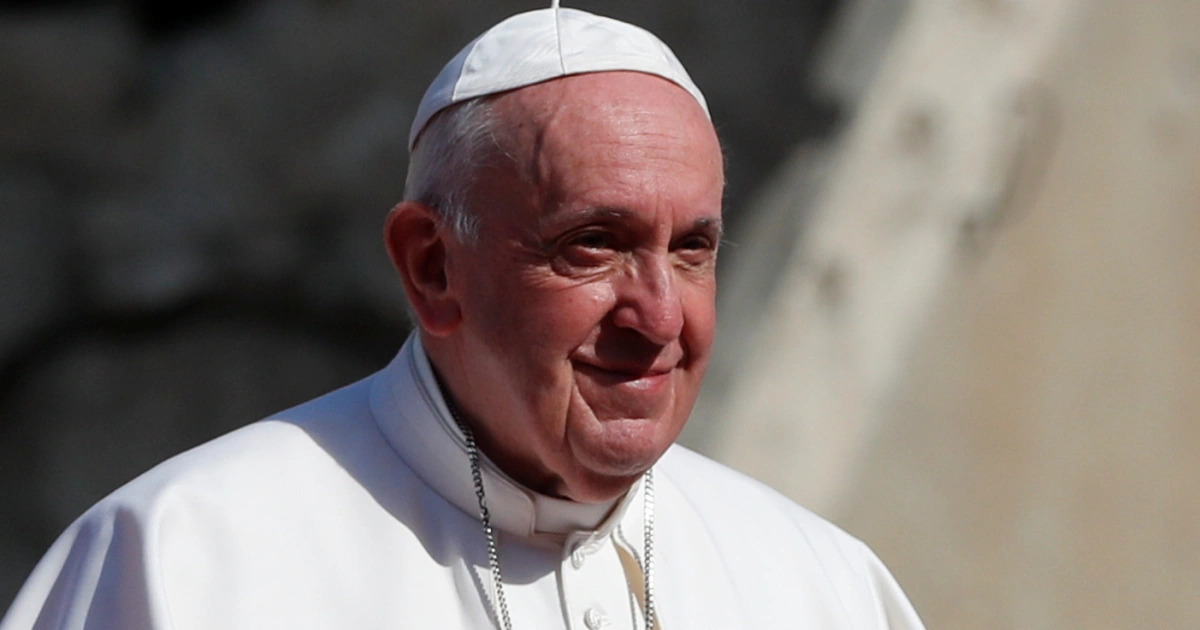
Pope Francis appeals for reconciliation to prevail over war

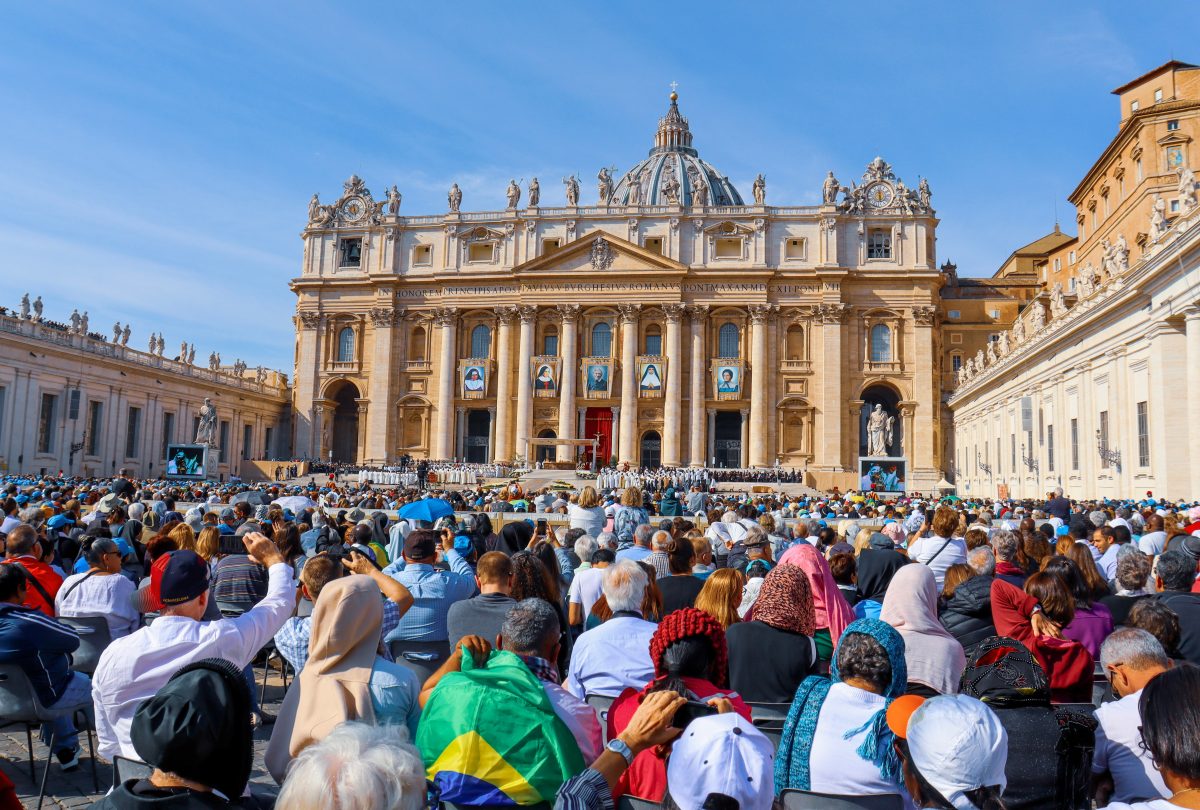
After praying the Easter season Marian prayer of the Regina Coeli with pilgrims in St. Peter’s Square, Pope Francis recalled the reconciliation worked by Christ in His death and Resurrection.

The Pope urged Christians to overcome any mentality that seeks recourse to division and war with the power of Christ’s proclamation of reconciliation.

Click here to read more.

Photo: GCIS

Categories
In The News

Phased approach to address flood aftermath

Government is taking a phased approach to dealing with the effects of floods that have ravaged KwaZulu-Natal and Eastern Cape provinces.

Addressing the nation on government’s response to the disastrous floods, President Cyril Ramaphosa said government will be responding to the disaster in three phases.

“First, we will focus on immediate humanitarian relief, ensuring that all affected persons are safe and that their basic needs are met. Second, we will focus on stabilisation and recovery, rehousing people who have lost homes and restoring provision of services.

“Third, we will focus on reconstruction and rebuilding. This will not only involve the construction and repair of major infrastructure. It will also involve the construction of houses in suitably-located areas and measures to protect the residents of these areas from such adverse weather events in the future,” President Ramaphosa said in his address to the nation on Monday night.

This as he announced that Cabinet at a special session on Sunday, decided to declare a National State of Disaster.

To date, 443 people are known to have lost their lives in KwaZulu-Natal, with approximately 48 people still missing or unaccounted for. One death has also been reported in the Eastern Cape.

Several national government departments are working with their provincial and local counterparts to ensure an effective response in the allocation of financial resources and technical expertise to the emergency.

The President announced that the South African Police Service (SAPS) and the South African National Defence Force (SANDF) have been leading search and rescue efforts, with a total of 247 rescue operations to date.

This includes the deployment of SAPS personnel, diving teams, canine units and various vessels, helicopters and fixed-wing planes to the most affected areas.

“Aircraft from the SANDF have been used both for rescue and for the delivery of relief supplies – such as food, water, tents and blankets – to people in inaccessible areas. I have authorised the SANDF to bring in more personnel, water storage and purification supplies and engineering teams to assist with electricity and water restoration.

In addition, various government departments at national and provincial level, municipalities, non-governmental organisations and businesses are distributing basic relief materials such as food, blankets, mattresses, clothing, chronic medication, toiletries and cooking utensils.

Solidarity Fund

The President also reported that he has met with the leadership of the Solidarity Fund for assistance. The board of the fund has agreed to assist with humanitarian and other forms of relief in partnership with government, the private sector and various other non-governmental and community-based organisations.

“The National Treasury will make an initial amount of funds available as part of our efforts with the Solidarity Fund to implement these support measures. The Solidarity Fund has effectively managed the resources that government, the private sector and many South Africans made available to manage the COVID-19 effort as well as the July 2021 unrest assistance measures,” the President said.

The fund will now set up a separate bank account for the Flood Disaster that can be used by South African and foreign donors who want to contribute to relief efforts.

“The bank account details will be available during the course of tomorrow on the website of the Solidarity Fund,” said President Ramaphosa.

Restoring water supply

In a bid to ensure the supply of clean water and shelter in the affected areas, the Department of Water and Sanitation is leading efforts to restore water supply to areas of eThekwini that have been affected by the damage to infrastructure.

This includes repairs to the aqueducts supplying water from the Nagle Dam to Durban Heights, assessing and repairing damage to water treatment works, and identifying and repairing leaks.

“Areas without water are being supplied by water tankers, with the municipal fleet being complemented by an additional 100 tankers. Most areas that experienced electricity disruptions, particularly in eThekwini, are now back to full service.”

Temporary residential units and road repairs

Meanwhile, the Department of Human Settlements has begun an assessment of damages to houses across the province, and has determined initial requirements for the provision of temporary accommodation, repairs to damaged houses and the replacement of destroyed houses.

 “Preparations are underway to provide temporary residential units and with the construction expected to start by the end of this week. Financial assistance through a voucher system is being made available to assist households to rebuild partially damaged houses. Infrastructure South Africa is also working with relevant departments in all spheres to provide technical support for the repair and rebuilding of infrastructure, including roads, bridges and schools that have been damaged.

The South African National Roads Agency is the lead agency on the extensive work required to repair roads in the province, starting with an immediate focus on the N2 and N3 highways.

 “To date, around 1 300 road repair projects have been identified by the agencies involved. Progress has been made in restoring operations at the Port of Durban, opening alternative routes for trucks to access the port terminals and clean up debris in the harbour,” the President reported.

The Department of Small Business Development is also mobilising funds to assist small businesses that have been affected by the floods.

R1 billion allocation

“The Minister of Finance has said that a R1 billion is immediately available, and will be approaching Parliament for the appropriation of additional resources.

“I will be approaching the Presiding Officers to request a Joint Sitting of Parliament next week to ensure that the elected representatives of the people of our country can be directly involved in oversight of the work that is needed to provide relief and to rebuild.

“A comprehensive assessment of the economic cost of these floods still has to be made, but it is clear that it will run into billions of rands for the rebuilding of infrastructure and loss of production,” the President said.

No room for corruption

As government undertakes this work, the President has warned that there can be no room for corruption, mismanagement or fraud or any sort.

“It will be critical, as we undertake this work, that all the resources we mobilise are used for their intended purposes and reach the intended recipients. Learning from the experience of the COVID-19 pandemic, we are drawing together various stakeholders to be part of an oversight structure to ensure all funds disbursed to respond to this disaster are properly accounted for and that the state receives value for money.”

Climate change

Meanwhile, President Ramaphosa has noted that the floods are a tragic reminder of the increasing frequency of extreme weather conditions as a result of climate change.

“We need to increase our investment in climate adaptation measures to better safeguard communities against the effects of climate change. At the same time, we need to pursue our own emission reduction targets through a just transition that protects vulnerable communities and safeguards jobs,” he said.

Helping others

The President commended the many individuals and organisations that have taken the initiative to provide humanitarian assistance to those most affected.

He also commended and expressed appreciation to the emergency service personnel, including health care workers, police and defence personnel, municipal workers, volunteers and community members who spent many hours, at great risk to themselves, saving lives and providing support.

“We were deeply saddened to learn about the death over the weekend of a police diver, Sergeant Busisiswe Mjwara, who died while conducting a search for victims in the Msunduzi River. We extend our deepest sympathies and condolences to her family, friends and colleagues.”  – SAnews.gov.za

Photo: GCIS

Categories
In The News

Cabinet declares National State of Disaster

Cabinet has declared a National State of Disaster in response to floods, which have wreaked havoc in KwaZulu-Natal and parts of the Eastern Cape.

The decision follows a Cabinet special session held on Sunday night.

Addressing the nation on government’s response to catastrophic floods, which have devastated parts of KwaZulu-Natal and the Eastern Cape on Monday evening, President Cyril Ramaphosa noted that on 11 and 12 April 2022, parts of KwaZulu-Natal received between 200 and 400 millimetre of rainfall in a 24-hour period, which affected all parts of the province.

The entire eThekwini metro and the districts of iLembe, Ugu, King Cetshwayo and uMgungundlovu were reported as being the most affected by the floods.

“Heavy rainfall and flooding have also been experienced in the Eastern Cape, particularly in the districts of Alfred Nzo, Joe Gqabi and OR Tambo, where roads, bridges and houses have been extensively damaged, especially in the Port St Johns’ area,” President Ramaphosa said.

Lives lost

To date, 443 people are known to have lost their lives in KwaZulu-Natal, with approximately 48 people still missing or unaccounted for. One death has also been reported in the Eastern Cape Areas located close to rivers, waterways, particularly informal settlements, were severely affected, and many dwellings were swept away.

Damages

Meanwhile, almost 4 000 homes have been completely destroyed and over 8 300 homes have been partially damaged. It is also estimated that more than 40 000 people have been displaced by these floods.

The President described the floods as a humanitarian disaster that calls for a “massive and urgent relief effort.”

“The lives, health and well-being of thousands of people are still at risk. The floods have caused great economic and social damage,” the President said.

The Port of Durban, which is one of the largest and busiest shipping terminals on the continent and which is vital to the country’s economy – has also been severely affected.

Access to the port has been disrupted by extensive damaged to Bayhead Road, which links to the Durban Port Operations to the rest of the country. The route handles 13 000 heavy vehicles per day.

The President noted that the damage caused to businesses in the area have not been fully quantified, but assessments so far suggest that the eThekwini metro accounts for nearly half of all the reported damage.

President Ramaphosa also noted extensive damage to public infrastructure, including schools, health facilities, police stations and magistrates’ courts. It is estimated that over 270 000 learners have been affected and over 600 schools have been damaged.

“Sixteen of these schools cannot be accessed due to damage to connecting roads and bridges. We are saddened by the reports that a number of learners and at least one educator have died.

“Sixty-six public health care facilities have been affected, although there has been minimal disruption to health services in most affected districts,” President Ramaphosa said.

Restoring basic services

He added that extensive work is underway to restore basic services, including water, electricity, sanitation and waste removal to various areas in KwaZulu-Natal.

“These efforts are being hampered by to damage to main supply systems and the inaccessibility of some areas,” the President said.

He said that given the extent and impact of the floods, the designation of a provincial state of disaster is inadequate to deal with the scale of the emergency and the required reconstruction and rehabilitation measures and responses.

“The significance of the Port of Durban and related infrastructure for the effective operation of the country’s economy means that this disaster has implications far beyond the province of KwaZulu-Natal.

“With the heavy rains and flooding in the Eastern Cape and indications from the South African Weather Service that the North West and Free State may also be affected by bad weather, it is clear that there are other areas of the country that need emergency intervention.

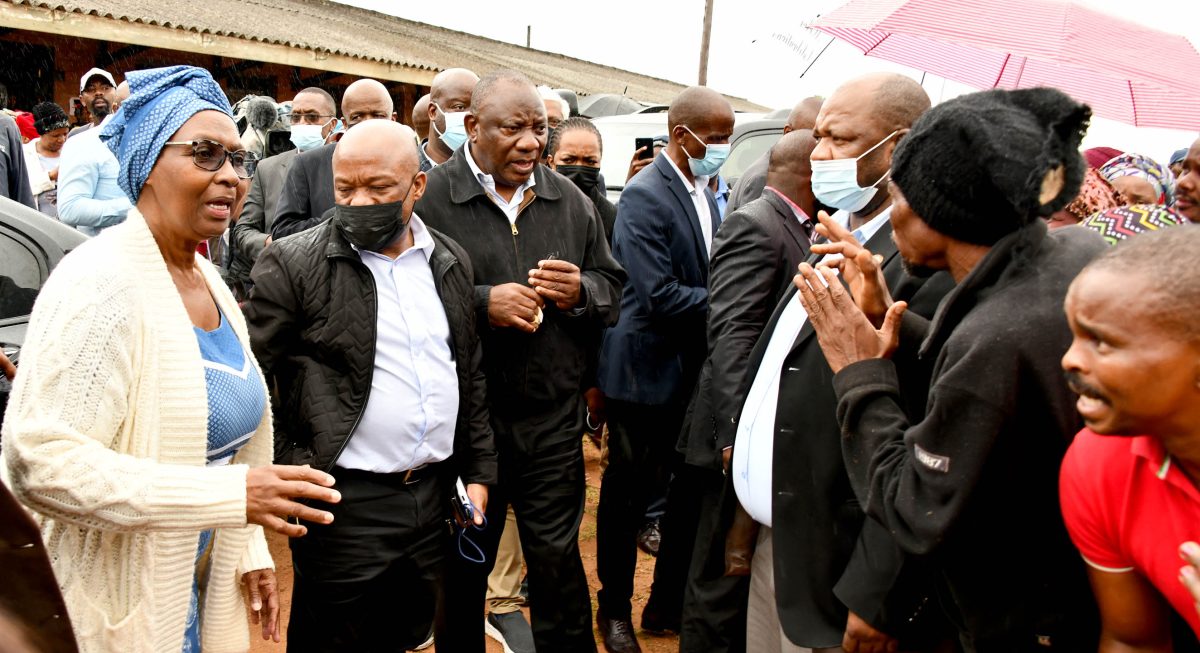
Last week President Ramaphosa, including a number of Ministers, accompanied by KwaZulu-Natal Premier Sihle Zikalala and MECs, as well as the Executive Mayor and councillors, visited several areas in the province.

During the visit, the President heard heart-breaking stories about children, mothers, fathers, sisters, brothers, grandparents and neighbours being swept away as their homes crumbled under the pressure of the flood waters.

“Tonight, we are a nation united in our grief. We are a nation united in our determination to assist those who have lost their homes and possessions, and who are in desperate need of food, water and shelter.

“The rains of the last week have caused extensive damage to houses, businesses, roads, bridges and water, electricity, rail and telecommunications infrastructure. The flooding has disrupted fuel and food supplies,” the President said.

The Minister of Cooperative Governance and Traditional Affairs, will gazette the declaration of the State of Disaster.– SAnews.gov.za

Photo: GCIS

Categories
In The News

KZNCC actively responding to flood devastation – SACC

The South African Council of Churches extends it deepest condolences to the people of KwaZulu Natal (KZN) where the impact of the floods has resulted in the unfortunate loss of over 300 lives, with additional losses to infrastructure that are yet to be calculated.
“The devastation we have seen – the destruction of homes, schools and churches and the loss of lives – brings us to our knees as we pray for the safety of the people of KZN,” said the General Secretary of the SACC, Bishop Malusi Mpumlwana.
As the country celebrates Easter this weekend, the SACC encourages members of the Christian faith to set aside a moment of prayer on Good Friday, 15 April 2022, to pray for KZN and the victims of the floods.  “Whether in our homes, or in our religious spaces – let us offer prayers for the KZN Province, and those affected by the floods.  Let us pray for safety; pray for the comfort of those who have lost families,  their homes and livelihoods; and let us pray in faith, that with the Resurrection of Christ on the third day, the spirit of restoration will wash over the province,” said Bishop Mpumlwana.

On the ground, spearheaded through the SACC provincial chapter, the KwaZulu Natal Christian Council (KZNCC), the church is actively responding to the devastating damage and loss to property and life. In its statement dated 13 April 2022, the KZNCC and the KZN Church Leaders Group led by Cardinal Wilfrid Napier, are working with the KZNCC Ecumenical Regional Offices throughout the province, partnering with organisations such as the Red Cross, Domino Foundation, Zoe Life, and City Hope to respond in disaster relief. They have identified at least 1 686 households affected by the floods across the province from the south coast to Jozini in the north. The numbers are growing as more reports are gathered through local churches  “We have requested clergy in the affected areas and from across the province to voluntarily participate in pastoral visits (pastoral counselling and support) comforting the families and individuals affected by the floods; we are also requesting church-based activists and clergy to come and volunteer in distributing food parcels and blankets to affected families and individuals,” said Dr Douglas Diva, the Chief Executive Officer of the KZNCC. Donations in kind are also being collected that will ensure the displaced are housed, fed, dressed and kept warm.

The SACC urges the residents of KZN and those who may travel to the province this weekend in observance of the Easter celebrations to review their Easter plans with the preservation of life in mind. “We are calling on churches in the affected areas, to review their Easter service plans and prioritise the safety of all individuals,” said Bishop Malusi.  The risk of gatherings in areas prone to landslides, or where there may be water shortages should serve as reason enough to find alternative ways of  marking the Easter observances.
“We’ve been advised that the rains may likely continue throughout this weekend, therefore, all road-users traveling into KZN should be mindful and careful, particularly when crossing bridges, and not take any risks with the lives of people” said the Bishop.

“As echoed in our statement of Saturday 9 April 2022, let us, through prayer, collectively mount all our pain, together with the pain of the devastation in the KZN – on the cross of the crucified Christ, that the Easter Resurrection may give us a new sense of human consciousness, heal the wounds of our past and restore what has been lost,” concluded Mpumlwana.

Photo: Unsplash

Categories
In The News

Stage two load shedding on course to be lifted

Eskom says it is remains cautiously optimistic that stage two load shedding will be lifted on Friday morning ahead of the Easter weekend.

The country – barring the flood-affected eThekwini Municipality – has been under stage two load shedding since Wednesday afternoon due to breakdowns and trips at the power utility’s power stations.

Load shedding had also been implemented on Monday and Tuesday evening.

“The power system remains fragile and while that holds, Eskom will continue with the current instance of load shedding as previously communicated, which will be suspended at 5am on Friday. The planned suspension of load shedding is due, in part, to the lower demand expected over the weekend.

“However, there remains a possibility that load shedding will need to be implemented during next week as the demand returns,” Eskom said.

The power utility reported the following breakdowns and returns to service at power stations:

  • A unit at Kendall Power Station tripped
  • A unit at Kusile Power Station also tripped but was returned to service
  • At least one of the five units that tripped at Camden Power Station this week is back online

“Eskom will undertake opportunity maintenance during the low demand weekend to address some [further] risk on running units.

“During the weekend, Eskom will [also] release some water into the river system from the Ingula Pumped Storage Scheme in order to relieve the capacity constraints that have been created by the heavy rains. This will be done in a responsible manner in collaboration with the authorities,” Eskom said.

The power utility said it will keep the public informed on any changes in the stability of the grid.

“Eskom would like to inform the public that any further deterioration in generation capacity may require further load shedding. We therefore request the public to continue using electricity sparingly particularly over the long weekend to assist to replenish the emergency generation reserves in anticipation of the coming week,” the power utility said. – SAnews.gov.za

Photo: Unsplash

Categories
Inside Church

WCC extends condolences to Caritas upon death of staff in Ukraine

“ I wish to express my sincere condolences on the loss of your staff 11 April in Mariupol”, Sauca wrote. “We join your community in prayer for the families of those who you lost and with those continuing to provide the much needed humanitarian relief in Ukraine.”

Sauca concluded: “We join in calling for a cease-fire in Ukraine, for humanitarian corridors to be opened and respected, and for sustained negotiations for a secure and just peace, to bring an end to this suffering.”

Click here to read more.

Photo: Unsplash

Categories
Inside Church

Conference calls on churches to listen, speak the truth and advocate for human rights

The conference, “Christian Perspectives on Human Dignity and Human Rights”, was organized jointly by the World Council of Churches (WCC) Commission of the Churches on International Affairs (CCIA), United Evangelical Mission, and Evangelical Church in Germany.

The message calls on churches to “rediscover the rich biblical narratives that affirm human dignity, justice and the rule of law,” and urges “further theological reflection and discernment for responsible action.”

Click here to read more.

Photo: Unsplash

Categories
Inside Church

Pope invites Poles to celebrate Easter with Ukrainian refugees

Greeting Polish pilgrims gathered in the Paul VI Hall for the weekly General Audience, Pope Francis noted that many Polish nationals are approaching Easter as the war in neighbouring Ukraine continues to rage.

Poland has opened its doors to more than 2.5 million Ukrainian refugees since the Russian invasion on 24 February.  

Over 300,000 Ukrainians, of which 100,000 are children, have found refuge in Warsaw alone. Authorities and civil society organizations are engaged in providing the support they need to continue their lives, and already 15,000 Ukrainian refugees are enrolled in Polish schools.

Click here to read more.

Photo: Unsplash