Categories
In The News

National State of Disaster on COVID-19 extended

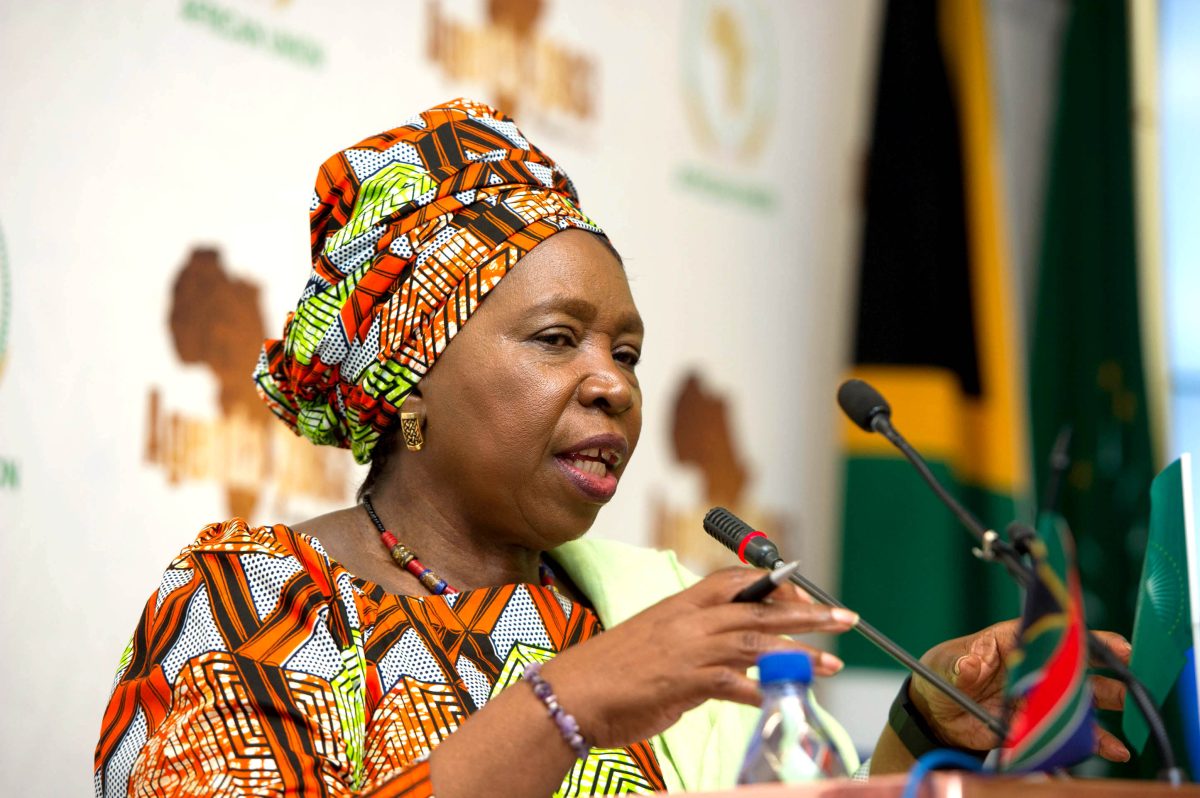
Cooperative Governance and Traditional Affairs (CoGTA) Minister, Dr Nkosazana Dlamini Zuma, has gazetted a further extension of the National State of Disaster on COVID-19, until 15 March 2022.

The Ministry on Monday said the extension followed a special Cabinet meeting to determine the extent to which the management of the COVID-19 pandemic still requires the existence of the National State of Disaster and the legal framework to manage the virus outside the Disaster Management Act.

“This will allow government to establish alternative measures to detect and contain further outbreaks,” CoGTA said in a statement.

Under the current regulations, nearly all economic and social restrictions have been lifted, and civil liberties are unrestricted.

Read more:

Disclaimer: Please note that all press releases and statements published by Bible Media News do not necessarily represent the viewpoint of Bible Media.

Photo: GCIS

Categories
In The News

SA, WHO discuss vaccine production

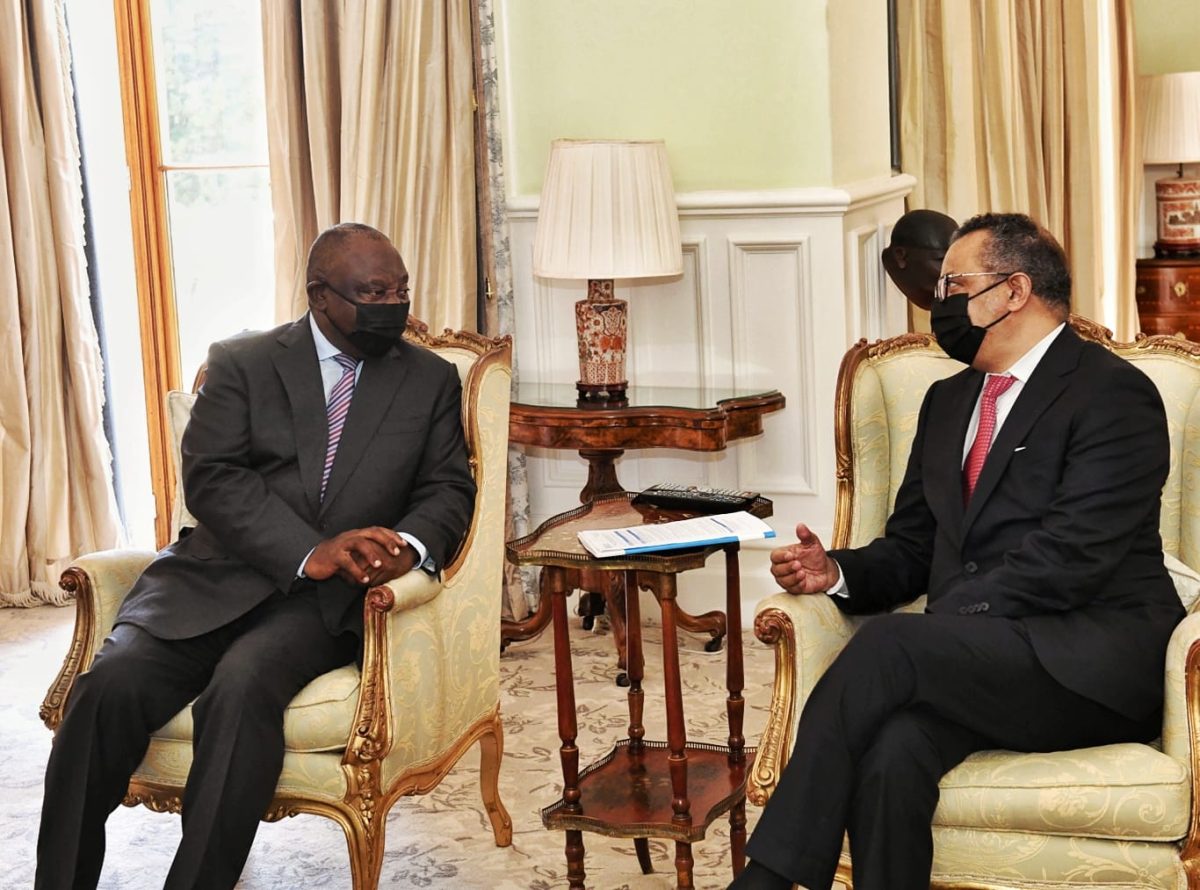
President Cyril Ramaphosa has welcomed the oversight visit by the World Health Organisation as an opportunity to profile the depth of intellectual and technological capacity on the African continent, and the integrity with which, intellectual property is being leveraged to enable vaccine production on the continent.

The President met with World Health Organisation (WHO) Director-General, Dr Tedros Ghebreyesus,in Cape Town on Friday, to discuss progress in making Africa self-sufficient in the production of COVID-19 vaccines and related treatments.

Dr Ghebreyesus and the Belgian Minister of Development Cooperation Meryame Kitir visited the country on a two-day visit to various vaccine-related sites around Cape Town, hosted by the Department of Science and Innovation, the Department of Health and other partners.

The two-day visit served to showcase South Africa’s capacity and infrastructure in the development of vaccines for current and potentially new strains of COVID-19, and to highlight how manufacturing in South Africa is a critical contribution to the continent’s response to COVID-19.

Read more:

Disclaimer: Please note that all press releases and statements published by Bible Media News do not necessarily represent the viewpoint of Bible Media.

Photo: GCIS
Categories
In The News

Africa on course to ‘controlling’ COVID-19 pandemic

World Health Organisation (WHO) Africa Regional director, Dr Matshidiso Moeti, says the continent is on course to controlling the COVID-19 pandemic.

She was speaking as the continent is about to observe two years since the first case of COVID-19 was identified on 14 February.

Since then, at least 11 million cases and 242 000 deaths as a result of the virus have been recorded in Africa.

“If the current trends hold, there is light at the end of the tunnel. As long as we remain vigilant and act intensively, particularly on vaccinations, the continent is on track for controlling the pandemic,” she said.

Moeti reflected that the past two years have been “extremely difficult” for the continent.

Souce: SAnews.gov.za

Click here to read more.

Disclaimer: Please note that all press releases and statements published by Bible Media News do not necessarily represent the viewpoint of Bible Media.

Photo: Unsplash

Categories
In The News

R350 grant extended for another year

Millions of South Africans who benefited from the R350 COVID-19 Social Relief of Distress Grant can breathe a sigh of relief as government has extended it for a further year until March 2023.

Delivering his State of the Nation Address on Thursday evening, the President highlighted that since the onset of COVID-19, the Social Relief of Distress Grant has provided support to more than 10 million unemployed people who were most vulnerable to the impact of the pandemic.

“Mindful of the proven benefits of the grant, we will extend the R350 SRD Grant for one further year, to the end of March 2023,” the President said.

Watch the full speech below:

Click here to read more.

Disclaimer: Please note that all press releases and statements published by Bible Media News do not necessarily represent the viewpoint of Bible Media.

Photo: GCIS / Flickr
Categories
In The News

Good News: End of State of Disaster in sight for SA

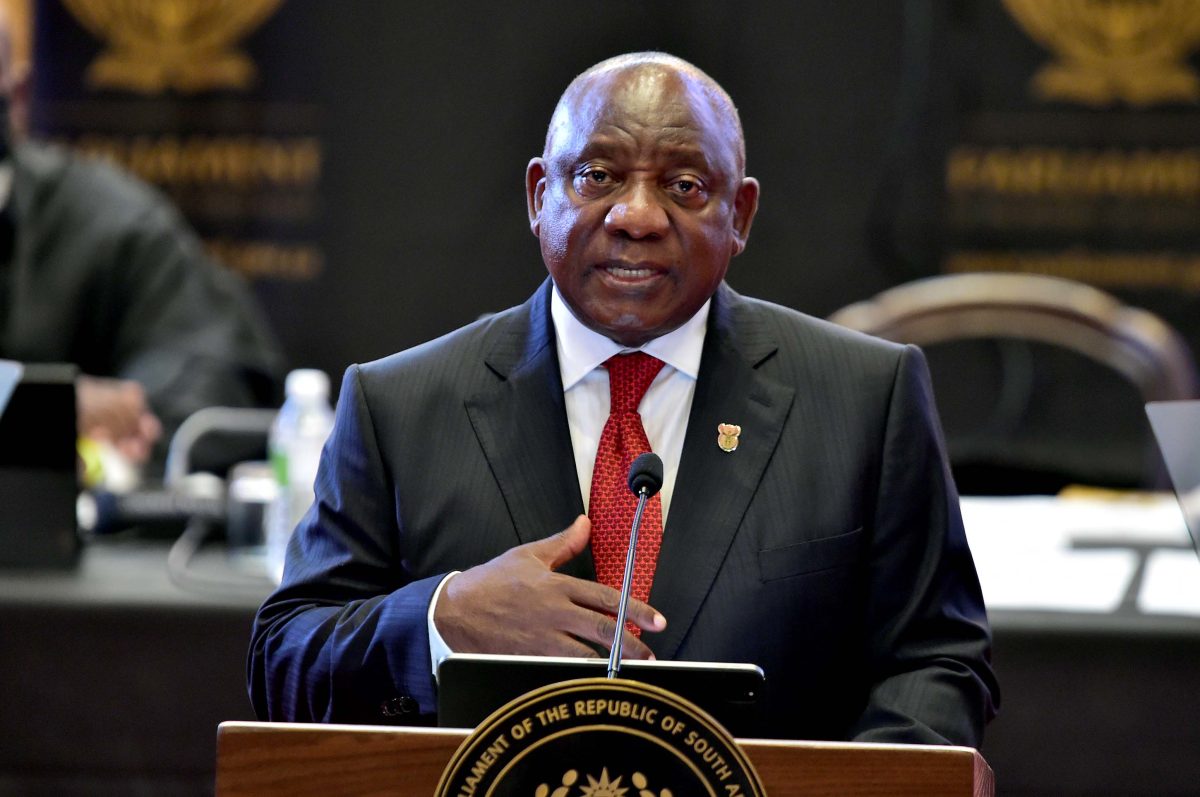
President Cyril Ramaphosa announced on Thursday that government plans to scrap the National State of Disaster as the country enters a new phase in the management of the COVID-19 pandemic.

“It is our intention to end the National State of Disaster as soon as we have finalised other measures under the National Health Act and other legislation to contain the pandemic,” said the President on Thursday.

On 15 March 2020, President Ramaphosa declared the National State of Disaster in terms of the Disaster Management Act and announced a range of measures to contain the COVID-19 outbreak. 

Speaking during the televised 2022 State of the Nation Address (SONA) from the Cape Town City Hall, the First Citizen said nearly all restrictions on economic and social activity have already been lifted, which is largely thanks to the vaccination rollout programme.  

Citing the latest data, he said South Africa has administered over 30 million COVID-19 vaccine doses, while nearly 42% of all adults and 16% of everyone over the age of 50 is fully jabbed.

“This is the real achievement that many countries on our continent have not been able to reach.”

He reminded citizens that vaccines are the best defence against illness, death and COVID-19, which has claimed close to 100 000 lives locally.

“I’ve always said from a personal point of view, had I have not been vaccinated in December when I contracted COVID-19, I probably will not be standing here,” he reflected.

The President took the time to urge South Africans to take the life-saving jab and continue to observe basic health measures and remain vigilant.

“We will be able to get on with our lives, even with the virus in our midst,” he said, adding that the pandemic has exacerbated the divide between those who are employed and those who are jobless.

Solidarity Fund 

President Ramaphosa announced that the Solidarity Fund has raised R3.4 billion from more than 300 000 South Africans and companies, while more than 400 individuals and 100 companies volunteered their time and services.

“The fund has played a pivotal role in supporting the national health response and alleviating the humanitarian crisis that confronted our country and our people.”

He thanked everyone who contributed to the fund, including some Members of Parliament and other initiatives to support those affected by the pandemic.

The President also paid tribute to the many healthcare and frontline workers who play a key role in the fight against Coronavirus.

“The nation owes a great debt of gratitude to the dedicated health workers and to other frontline staff who put their own health and lives at risk to care for the ill and the vulnerable during this period,” he said. – SAnews.gov.za

Watch the full address below:

Click here to read more.

Disclaimer: Please note that all press releases and statements published by Bible Media News do not necessarily represent the viewpoint of Bible Media.

Photo: GCIS / Flickr
Categories
In The News

READ IN FULL: State of the Nation Address (SONA) 2022

Fellow South Africans,On this day, 31 years ago, President Nelson Mandela walked out of the gates of Victor Verster Prison a free person, a living embodiment of the resilience and courage of the South African people.For nearly 40 million years, an extraordinary ecosystem has existed here at the southernmost tip of our continent.

The Fynbos Biome, which stretches across the Cape, has among the most distinctive features of any plants found on earth. It can adapt to dry, hot summers and cold rainy winters. It is wondrous in its diversity.Our national flower, the Protea, is a species of fynbos.

When I opened the third National Investment Conference last year, I spoke of the Protea’s unique properties that in so many ways resemble our national character.What is most unique and special about fynbos is that to be sustainable and survive, it needs fire.

At least once every twenty years, fynbos must burn at extremely high temperatures to allow the ecosystem to be rejuvenated and grow afresh.

Throughout the summer, the burned foliage lies desolate. But when the autumn rains return, the seeds germinate, and its life cycle begins all over again. The mountains bloom with new life as plants which once seemed lost grow back even stronger than before.We, the people of South Africa, have over the past year experienced a terrible hardship.Like a wildfire that sweeps across the mountainous ranges where the fynbos grows, a deadly pandemic has swept across the world, leaving devastation in its path.

And yet, like the hardy fynbos of our native land, we too have proven to be resilient in many ways.For three centuries, we were victims of oppression, dispossession and injustice. And for three centuries, we resisted.

The flames of injustice may have scarred us, but they did not consume us.The rains of democracy brought rejuvenation and the birth of a new nation.We have risen time and time again from the depths of darkness to herald a new day.As we look on the grave damage that this disease has caused, we know that like the fynbos, like all those who have walked this land before us, we will rise again.

Nearly a year has passed since South Africa saw its first case of the novel coronavirus, COVID-19.Since then, nearly one-and-a-half million people in our country are known to have been infected by the virus.More than 45 000 people are known to have died.Beyond these statistics lies a human story of tragedy and pain.There is no family, no community and no place of work that has not lost someone they knew, worked with and loved. It is also a story of courage and resilience. The resilience of the hospital worker who – day after day, night after night – goes to work to save lives, knowing that they, themselves, are at risk of infection.It is a wonderful account of the courage of the police officer, the soldier, the essential worker, the carer and all those on the frontline, who have kept our country safe, our people fed and our economy going.It is a story of solidarity and compassion.

Of a nation that has stood together to confront COVID-19 in ways not seen since the early days of our democracy.More than anything else, this crisis has revealed the true character of our remarkable nation. It has revealed a spirit of the people who refused to be defeated. It is this South African spirit that must drive our resolve to build a new and more equal economy and a better, more just society.The year ahead must be a time for change, for progress and for rebirth. It must be a year in which we rise.

This is no ordinary year, and this is no ordinary SoNA.I will therefore, focus this evening on the foremost, overriding priorities of 2021.First, we must defeat the coronavirus pandemic.

Second, we must accelerate our economic recovery.Third, we must implement economic reforms to create sustainable jobs and drive inclusive growth.And finally, we must fight corruption and strengthen the State.In the coming weeks, we will address the other important elements of government’s programme for the year.Fundamental to our nation’s recovery is an unrelenting and comprehensive response to overcome the coronavirus.South Africa has just emerged from the second wave of infections since COVID-19 arrived on our shores in March last year.Driven by a new variant of the virus, this second wave was more severe and cost many more lives than the first wave.

Nevertheless, the human cost could have been far greater.Had we not moved quickly to restrict movement and activity, had we not prepared our health facilities, had South Africans not observed the basic health protocols, the devastation caused by this virus could have been far worse.

This year, we must do everything in our means to contain and overcome this pandemic.

This means intensifying our prevention efforts and strengthening our health system.It also means that we must undertake a massive vaccination programme to save lives and dramatically reduce infections across the population.

Earlier this week, we were informed that one of the vaccines that we had procured, the AstraZeneca vaccine, offers minimal protection from mild to moderate infection by the new variant known as 501Y.v2.This is according to early findings of a study by our scientists and researchers.We applaud these scientists for leading this research and providing new evidence that is vital for guiding our response.

Since this variant is now the dominant variant in our country, these findings have significant implications for the pace, design and sequencing of our vaccine programme.While it should not delay the start of the vaccination programme by much, it will affect the choice of vaccines and the manner of their deployment.The first phase of our vaccination programme, which is targeted at health and other frontline workers, will now use the Johnson & Johnson vaccine, which has been shown to be effective against the 501Y.V2 variant. We have secured nine million doses of the Johnson & Johnson vaccine.The first batch, of 80 000 doses, will arrive in the country next week.Further consignments will arrive over the next four weeks, totalling 500 000 Johnson & Johnson vaccines.

All provinces have rollout plans in place as the first vaccines come through. I wish to thank all provinces for their level of preparedness for this massive undertaking that we are about to embark upon.In addition, we have secured 12 million vaccine doses from the global COVAX facility.This will be complemented by other vaccines that are available to South Africa through the African Union’s (AU) African Vaccine Acquisition Task Team Facility.Pfizer has committed 20 million vaccine doses, commencing with deliveries at the end of the first quarter.We are continuing our engagements with all the vaccine manufacturers to ensure that we secure sufficient quantities of vaccines that are suitable to our conditions.

Read more below:

Disclaimer: Please note that all press releases and statements published by Bible Media News do not necessarily represent the viewpoint of Bible Media.

Photo: GCIS
Categories
In The News

All systems go for the 2022 State of the Nation Address

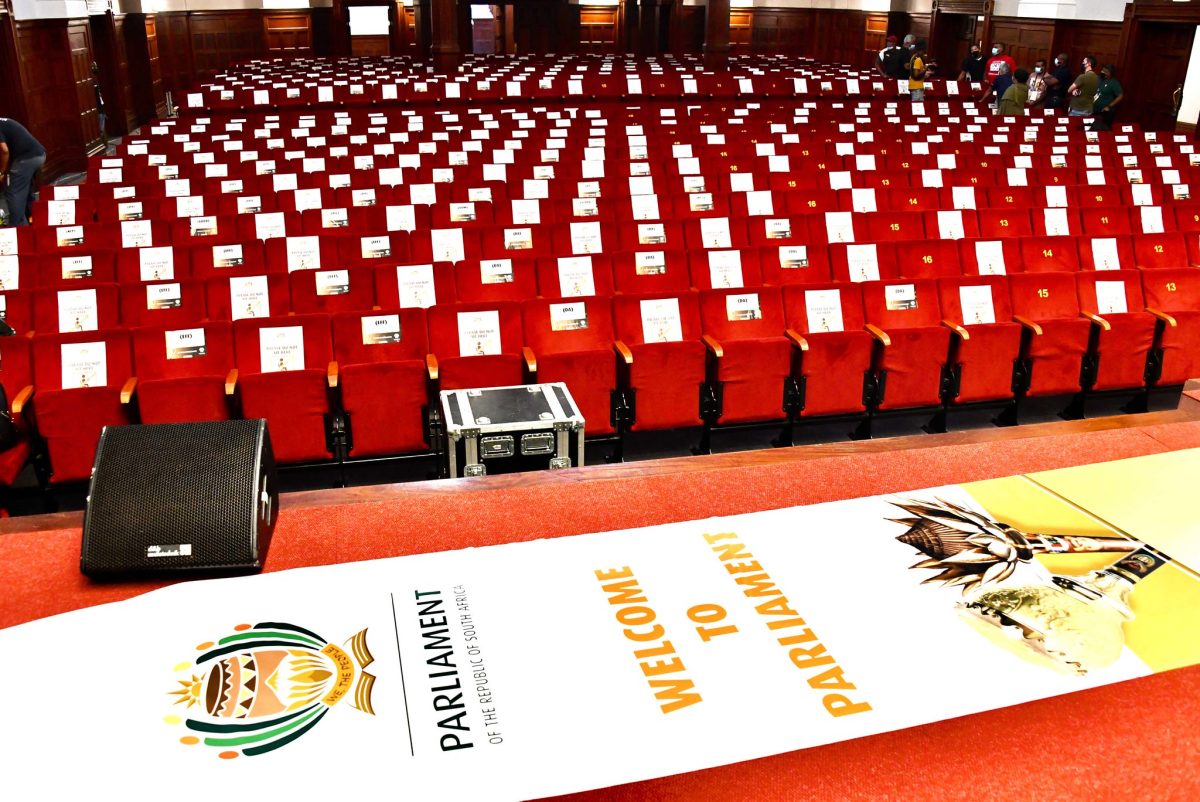
It will be an unfamiliar setting when President Cyril Ramaphosa lays out government’s roadmap when he delivers his sixth State of the Nation Address (SONA) this evening.

Apart from a limited number of Members of Parliament and guests in attendance, it will be the first time in the history of South Africa that the SONA is delivered outside of the Parliament precinct. This was after the building was gutted in a devastating fire in January.

As a result, this year’s instalment of the annual event will be delivered from the Cape Town City Hall, which, until 17 February 2022, falls under the control of Parliament, as per the definition of the precincts of Parliament, provided for in Section 2 of the Powers, Privileges, and Immunities of Parliament and Provincial Legislatures Act.

Photo: GCIS

Categories
In The News Inside Church

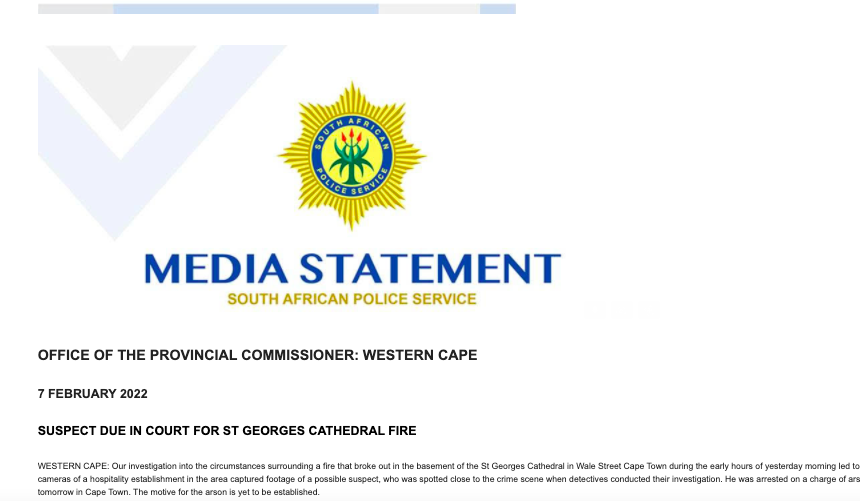
EXCLUSIVE: Suspect in arson case of St. George’s Cathedral released

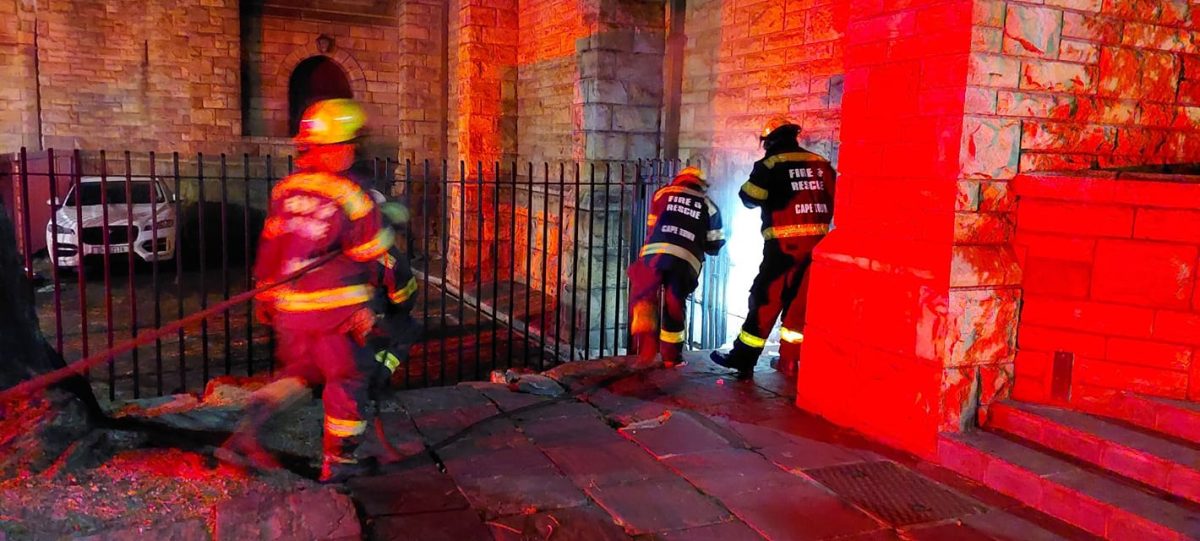
After provincial police spokesperson Andrè Traut issued a statement on Monday that a 40-year-old suspect was expected to appear in court on Monday regarding the alleged arson of the lower floor of the St. George’s Cathedral, and the case file was submitted to the Senior Public Prosecutor. But, according to André, a different decision has been made. The suspect was subsequently released while further investigations are underway.

In a statement on Monday, the SAPS said in a statement: “CCTV cameras from a hospitality business in the area captured footage of a possible suspect, who was spotted near the crime scene when detectives investigated the crime scene. He was arrested on a charge of arson and made his court appearance in Cape Town yesterday.”

Disclaimer: Please note that all press releases and statements published by Bible Media News do not necessarily represent the viewpoint of Bible Media.

Photo: Shutterstock

Categories
In The News

National minimum wage increases announced

The National Minimum Wage (NMW) for each ordinary hour worked has been increased from R21.69 to R23.19 for the year 2022 with effect from 01 March 2022.

“This announcement is in terms of Section 6 (5) of the NMW Act, No 9 of 2018, to amend the NMW contained in Schedule 1 and Schedule 2 of the National Minimum Act, published under Government Notice No. 44136,” Minister of Employment and Labour Minister, Thulas Nxesi said on Tuesday.

As in previous years, the adjustment provides exceptions for several worker groups.

These groups include farmworkers as they are entitled to a minimum wage of R23.19 per hour and domestic workers are entitled to a minimum wage of R23.19 per hour.

Workers employed on an expanded public works programme are entitled to a minimum wage of R12.75 per hour while workers who have concluded learnership agreements contemplated in section 17 of the Skills Development Act, 1998 (Act No 97 of 1998), are entitled to allowances contained in schedule 2.

“It is illegal and unfair labour practice for an employer to unilaterally change working hours or other employment conditions in order to implement the NMW. The NMW is the amount payable for ordinary hours of work and excludes payment of allowances (such as transportation, tools, food, or lodging), payments in kind (board or lodging), tips, bonuses, and gifts,” the Minister said.

The Act of 2018 requires the NMW Commission to review the rates on an annual basis and make recommendations to the Minister on any changes to the national minimum wage, while also taking into account alternative viewpoints, including those of the general public.

When determining the annual adjustment the Commission considers inflation, the cost of living, and the need to maintain the value of the minimum wage and gross domestic product.

It also considers wage levels and collective bargaining outcomes; productivity; employers’ ability to carry on their businesses successfully; the operation of small, medium, or micro-enterprises and new enterprises; and the likely impact of the recommended adjustment on employment or the creation of employment.

Click here to read more.

Disclaimer: Please note that all press releases and statements published by Bible Media News do not necessarily represent the viewpoint of Bible Media.

Photo: Unsplash

Categories
In The News

Ramaphosa will deliver the 2022 State of the Nation Address on Thursday

The State of the Nation Address (SONA) is an annual message delivered by the President of South Africa to a joint sitting of the two houses of Parliament. The SONA will chart government’s vision for building a more prosperous, united and equal South Africa. 

President Cyril Ramaphosa will deliver the 2022 State of the Nation Address on Thursday, 10 February 2022, at 7 pm. Here is why SONA Matters:

President Cyril Ramaphosa will in his SONA on Thursday, outline the first actions government will take in response to the findings and recommendations of the expert panel appointed in August 2021 to review government’s response to the July 2021 unrest. 
During his address, President Ramaphosa will highlight what has been achieved by the administration since his last address in 2021.He will also reflect on government’s response to fight the COVID-19 pandemic, and progress on the Economic Reconstruction and Recovery Plan.

President Cyril Ramaphosa will in his State of Nation Address on Thursday, outline the first actions government will take in response to the findings and recommendations of the expert panel appointed in August 2021 to review government’s response to the July 2021 unrest.
Government invites all South Africans to be part of the State of the Nation Address on Thursday, 10 February 2022 at 7pm. South Africans can tune into their favourite television or radio station to be part of this national milestone.

The Presiding Officers of Parliament will this morning  address the media on Parliament’s state of readiness for #SONA2022 to be delivered by President Cyril Ramaphosa on Thursday.

Read more:

Photo: Unsplash