Categories
In The News

Multiple factors contribute to load shedding – Eskom

Eskom says stage two load shedding was implemented due to depleted capacity caused by generator breakdowns, power station trips, the slow return to service of units, as well as higher demand for electricity as the colder weather starts to settle in.

As a result of these factors, the power utility was unable to feed the entire demand for electricity on Tuesday.

Click here to read more.

Photo: Shutterstock

Categories
In The News

South Africa is proposing plans to manage diseases like COVID-19

At the onset of the COVID-19 pandemic the South African government published “special regulations” to contain the spread of the disease. These actions were taken under special powers granted by the Disaster Management Act.

In April 2022, South Africa’s President Cyril Ramaphosa announced an end to the crisis management mode the country had been in for two years. Now processes are underway to embed some of the special regulations into the country’s general health regulations related to notifiable medical conditions.

Notifiable medical conditions are conditions, diseases or infections that pose an immediate and significant risk to public health. The diseases are categorised based on the severity of the threat they pose. Each disease is designated a reporting time and a set of conditions aimed at controlling its spread. Novel influenza viruses such as SARS-CoV-2, and diseases such as viral haemorrhagic fevers, including Ebola and malaria, are already on the list.

Click here to read more.

Photo: GCIS

Categories
In The News

Government continues support for African languages

Government continues to fund students wishing to further their studies using African languages, says Sport, Arts and Culture Minister Nathi Mthethwa.

The Minister said this while participating in a debate on Freedom Day during a plenary of the National Assembly on Tuesday.

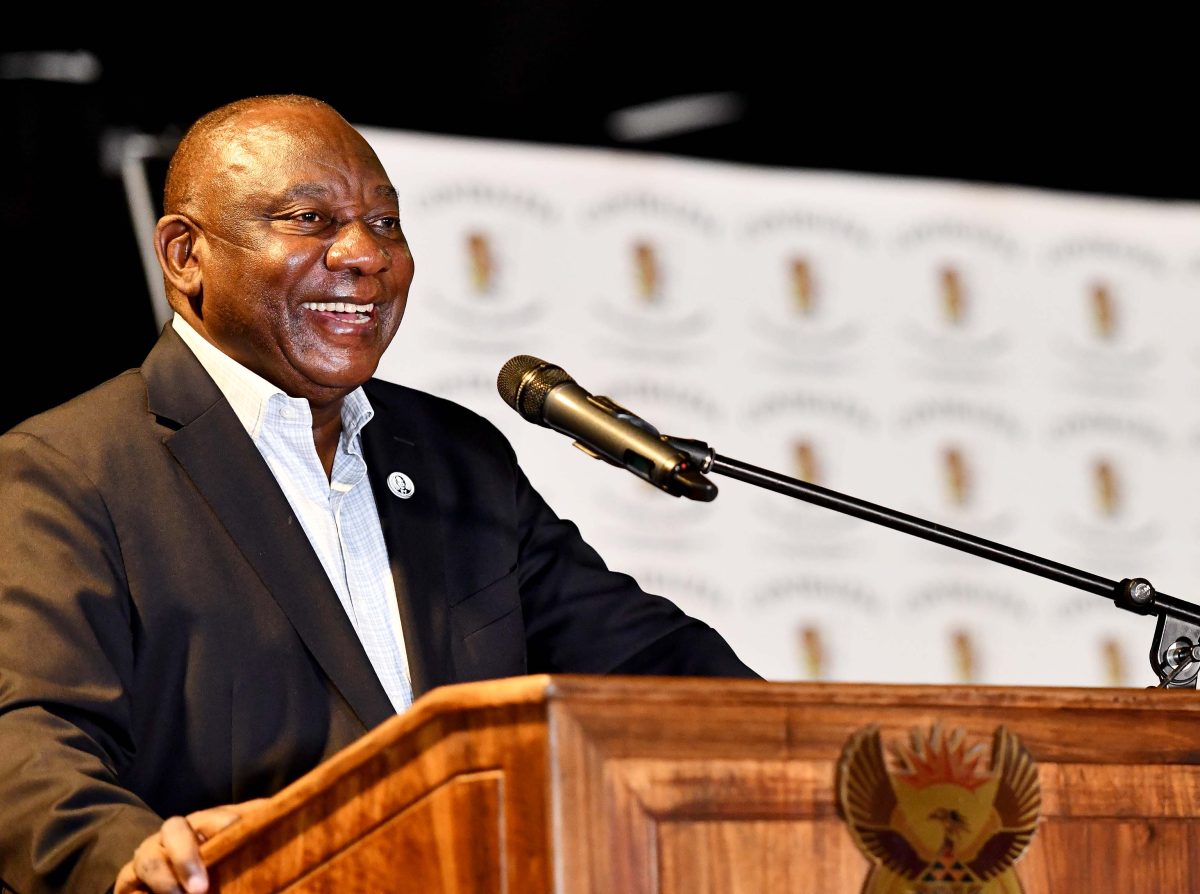
“Every year, we fund and support financially, students for African languages, anything between 120 to 400 per annum in all universities which we have in our country,” said the Minister.

Click here to read more.

Photo: GCIS

Categories
In The News

“Lament, Hope and Courage” – WCC publishes its Annual Review 2021

As of 3 May 2022, the WCC Annual Review 2021 is available for download online. The annual review records many of the WCC’s activities undertaken in 2021 and continuing into 2022.

Click here to read the review.

Photo: Unsplash

Categories
In The News

Government remains on high alert amid increase in daily COVID-19 infections


Health Minister, Dr Joe Phaahla, says while the country is still at great risk of COVID-19, government is observing the daily new infections and remains on high alert.

Phaahla said the next seven days until 6 May will give an indication as to whether the 5th wave of the pandemic has started.

Addressing a virtual media briefing on Friday, the Minister expressed concern at the daily new infections, which has been rising to up to 6 000 new cases a day.

“We need to remain on high alert. The rise in daily infections took a sharper uptick during the last week,” Phaahla said, adding that the trend needs to be observed.

He said government has noted the spike of cases in other parts of the world.

Nationally, there has been a 137% increase in new cases, compared to the seven days prior.

Gauteng, Western Cape and the Northern Cape are showing the highest new daily infections.

“COVID-19 remains a threat and it is not yet over… We cannot afford to drop our prevention measures. We urge those who have not vaccinated to come forward and take the jab.

“We are still under 50% of adults that have taken one dose of the vaccination. We need to get this to 60% of adults to protect us,” Phaahla said.

Phaahla urged young people who are between the ages of 18 – 35 to come forward in their numbers to protect themselves and the elderly people around them.

“Natural immunity wanes with time and cannot be boosted. It is only the vaccine immunity that can be boosted,” Phaahla said.

The Minister said as winter approaches, people will spend more time indoors, with a risk respiratory infections.

Meanwhile, South Africa recorded 4 146 new COVID-19 cases on Thursday, bringing the total number of laboratory-confirmed cases to 3 780 444.

The increase represents a 18.3% positivity rate.

“There has been an increase of 64 hospital admissions in the past 24 hours,” the Department of Health said in a statement. – SAnews.gov.za

Photo: Twitter

Categories
In The News

Flood relief: SA will not stand for acts of self-enrichment

President Cyril Ramaphosa has sent a stern warning to government departments and businesses providing goods and services, that South Africa will not stand for acts of self-enrichment at the expense of those who need relief – following a deluge of catastrophic floods in some parts of the country.

The President said this when he addressed a joint sitting of the National Assembly and the National Council of Provinces on Tuesday.

Click here to read more.

Photo: Unsplash

Categories
In The News

Pope: Transform mindsets of war into plans for peace

Pope Francis has again seized the opportunity to call on humanity to change its mindset and to plan for peace.

Addressing participants in a Catholic National Congress on Hispanic Ministry, he notes that we are living an “absurd time in which, without having yet come out of a pandemic that has afflicted all humanity with great suffering and sorrow, we find ourselves in the midst of the suffering and tragedy of a war.”

Click here to read more.

Photo: Unsplash

Categories
In The News

Power grid under pressure

State power utility, Eskom, has warned that the power system is under severe pressure due to delays in returning generating units to service and multiple breakdowns at some power stations.

The electricity supplier warned that although load shedding is currently not being implemented, this could change at short notice.

Click here to read more.

Photo: Unsplash

Categories
In The News

President promises light at the end of the load shedding tunnel

President Cyril Ramaphosa says government is doing everything in its means to ensure that the current load shedding experienced by the country becomes a thing of the past.

In his weekly newsletter to the nation, the President empathised with South Africans experiencing constant blackouts saying government is determined that this should not continue to be a part of their lives into the future.

“It is difficult and unacceptable for South Africans to endure load shedding. But we are doing everything in our means to ensure that, like state capture, it soon becomes a thing of the past,” the President said.

President Ramaphosa noted that last week much of the country experienced load shedding as breakdowns at several of Eskom’s power stations resulted in the loss of substantial generation capacity. 

He said that this costs the economy dearly and causes great frustration among all South Africans and creates hardship for households and businesses.

“A stable and reliable supply of electricity is essential for almost every aspect of our daily lives and a necessary condition for economic growth. That is why we are focused on achieving energy security as one of our foremost priorities,” he said.

Even as the country continues to experience crippling load shedding, he said the reality is that much progress has been made towards ending the energy supply challenges.

The President said that it is difficult to expect the millions of South Africans grappling with the inconvenience and hardship caused by intermittent power outages to remain patient as they resolve these longstanding challenges.

“It is difficult to convince them, as they sit in the dark, that we are making progress towards a secure and reliable supply of electricity.

“But the reality is that the energy landscape is being transformed, the problems at Eskom are steadily being addressed and substantial new energy generation capacity is being built,” the President said.

The root of power supply challenges

The President said that it was important for the nation to understand the root of the problem in order to solve this intractable problem.

He said that South Africa’s fleet of coal-fired power stations are old and their performance is deteriorating.

“Despite warnings from energy experts about impending energy shortages nearly two decades ago, there was a delay in commissioning new generation capacity.

“When construction began on Medupi power station in Limpopo in 2007 it was the first power station to be built by Eskom in more than 20 years. Medupi has subsequently been beset by delays, costs overruns and breakdowns due to design problems, with many of these challenges linked to allegations of corruption,” he explained.

President Ramaphosa said that for years the existing power stations were not maintained properly, particularly as these plants were made to ‘run harder’ to meet the country’s energy needs.

He added that there was insufficient investment in the technical skills needed to operate and maintain power plants.

He acknowledged that this situation was made worse by the devastating impact of state capture as billions of Rands were diverted from critical operational requirements at Eskom into private pockets.

“Eskom’s huge debt burden, including more than R36 billion of outstanding municipal debt, undermines Eskom’s ability to improve its maintenance, infrastructure build and other operations.

“In short, the load shedding we experience now is the result of policy missteps and the impact of state capture over many years. This is the situation that we have confronted since the start of this administration and that we are all working to fix,” the President said.

The President said that the country owes the board and management of Eskom their full support as they work to turn the utility around.

“They have to keep the lights on while rebuilding Eskom as a viable entity that fulfils its developmental mandate as a state owned enterprise, and positioning it for a just energy transition.

“We also owe our full support to the many hardworking employees of Eskom, including power plant workers. Despite many challenges, they are doing their best to keep our ageing plants running and supply the electricity the country needs,” he said.

Structural reforms

The statesman said that it may be difficult to imagine a future without load shedding, but the steps government is taking now will ensure that the country gets there.

He said that the process of structural reform the current administration embarked on in 2018 will have a far-reaching impact on the South African energy landscape, even if the changes will take time to bear fruit.

In 2018, government revived the Renewable Energy Independent Power Producers Procurement Programme that had been stalled since 2015.

This enabled 2205 MW from Bid Window 4 to proceed to construction, most of which has now been connected to the grid.

A further 5200 MW of solar and wind power is being procured through Bid Windows 5 and 6.

“This additional generation capacity is due to connect to the grid from late 2023. The Integrated Resource Plan 2019 provides for a further 3000 MW of gas and 500 MW of battery storage to be procured from independent power producers,” the President said.

In June 2021, the President announced that the licensing threshold for new generation projects would be raised from 1 MW to 100 MW.

This means that private investors do not require a license to build generation facilities up to this size and can produce their own power or sell it across the grid to other buyers.

“A joint task team comprising all relevant government departments and the private sector is working to accelerate investments in new generation projects under 100 MW. There is a pipeline of 58 projects under development with a combined capacity of 4500 MW, many of which will commence construction this year. The task team is working to speed up environmental authorisation and other approvals,” he said.

Draft Electricity Regulation Amendment Bill

President Ramaphosa emphasised that South Africa’s energy security can only be assured if the country can reduce reliance on a single utility for power and unlock private investment in generation capacity.

He said that this is one of the most important reforms contained in the draft Electricity Regulation Amendment Bill that was gazetted for public comment in February.

The Bill provides for the establishment of an independent transmission and system operator. This means that while the national grid will remain owned and controlled by the state, there will be competition among multiple generators selling power to distributors and customers.

“The introduction of a competitive electricity market will unleash new investment in generation capacity and will be a key driver of economic growth,” he said.

This reform process has already begun with the establishment of a separate transmission subsidiary by Eskom in December 2021, with the unbundling of Eskom on track to be completed by December 2022.

For its part, he said Eskom is forging ahead with its maintenance programme and with correcting design defects in its plants at Medupi and Kusile.

“It is also decommissioning old power stations that have reached the end of their design life and repurposing others to use cleaner energy sources. Eskom is also bringing in additional skills to assist with maintenance, including former employees and experienced plant managers,” he said. – SAnews.gov.za

Photo: Unsplash

Categories
In The News

New COVID-19 cases surpass 3000

The National Institute for Communicable Diseases (NICD) has reported at least 3 222 new COVID-19 cases in the country over the past 24 hour reporting period.

The new cases represent a positivity rate of some 16.7% – bringing the cumulative number of cases in the country to more than 3.7 million since the outbreak of the pandemic.

The provincial breakdown for new cases is as follows:

  • Gauteng leads the pack with 1727 new cases
  • KwaZulu-Natal follows with at least 818 new cases
  • In the Western Cape, 333 new cases were recorded
  • Some 83 new cases were recorded in Mpumalanga
  • In the Free State, 80 new cases were detected
  • The Eastern Cape recorded 68 more cases
  • At least 63 new cases were recorded in the North West
  • The Northern Cape reported at least 29 more cases
  • There were 21 more cases recorded in Limpopo

“Due to the ongoing audit exercise by the National Department of Health (NDoH), there may be a backlog of COVID-19 mortality cases reported. Today, the [department] reports five deaths and of these, two occurred in the past 24 – 48 hours. This brings the total fatalities to 100 303 to date.

“There has been an increase of 21 hospital admissions in the past 24 hours,” the NICD said on Sunday.

Meanwhile, some 3375 more vaccines were administered over the past reporting period – the majority of which were administered in Gauteng and the Western Cape, followed by the North West.

The total number of people who have received at elast one jab of the COVID-19 vaccines now stands at some 34.6 million jabs in arms. – SAnews.gov.za

Photo: Unsplash