In January 2022, the South African Council of Churches (SACC) made a call for the establishment of a national dialogue on ‘foreign nationals’ working in South Africa, following the utterances from members of society for the removal of all ‘foreign nationals’ from South Africa ‘with immediate effect’.
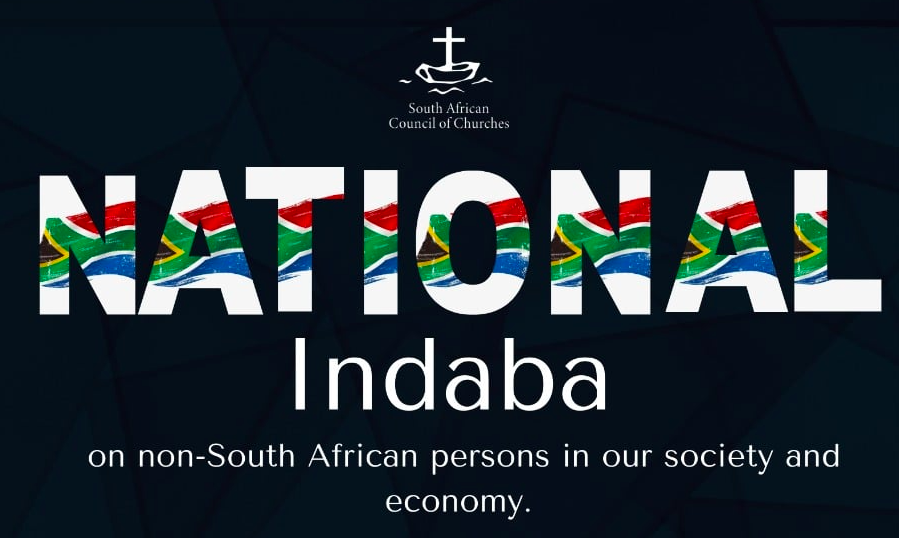
Since then, the SACC has been working on how to develop and manage a platform for dialogue; and following consultations with various stakeholders, today we would like to officially launch the process of the National Indaba on Non-South African Persons in our Society and Economy.
From the outset, let us clarify the use of the term ‘foreign nationals’. This term is a contradiction, as Prof. Cheryl Hendricks of the Institute for Justice and Reconciliation has pointed out, for people cannot be both foreign and nationals in a country. Therefore, the SACC refers to non-South Africans.
The foundation of our work in developing the approach for this platform has been to seek a full understanding of the challenge as it presents itself, and additionally interrogating the factors contributing to this challenge.
We have identified that a major contributor to this is the depth of poverty gnawing at the life opportunities of what the SACC refers to as the Excluded Majority, South Africans who are historically outside of the main fabric of the economy.
The Excluded Majority are largely located in the poor communities of our country, where there is much contestation for livelihood opportunities between poor South Africans and non-South African persons.
It is in these our communities populated by the Excluded Majority that the murmurings about non-South Africans ‘stealing the jobs’ earmarked for South Africans have been swelling in mass for years. It is also in these communities where we’ve seen brutal acts of violence against non-South Africans. We think of Isaac Sithole, who was burned alive in 2019 in Katlehong; we think of Emmanuel Sithole who was stabbed to death at Alexandra in 2015. We think of the deadly standoff between non-South Africans and local South Africans at Gqebera in October last year. Many may yet meet their deaths in such conflicts.
It is one manifestation of what the SACC terms the failure of democratic South Africa to achieve the Promise of the Post-Apartheid South Africa. The failure to achieve this makes for the growth of a scarcity mentality that grips poor communities in the absence of hope.
It must be noted, however, that the campaigns against non-South Africans are not confined to the poor communities, as they also reach to the professionals and other middle-class environments, as has begun in the case of foreign doctors.
Our priority today is to announce the creation of a national process towards a stable national environment where the growing lawlessness over non-South Africans can be addressed before it spills into the broader decline of the rule of law, through what may seem like “justifiable” acts of public frustration.
This National Indaba serves to bring all interested parties to one process of engagement, in an organised and structured manner, with the intention of finding lasting solutions to the tensions over non-South African persons in our society and economy.
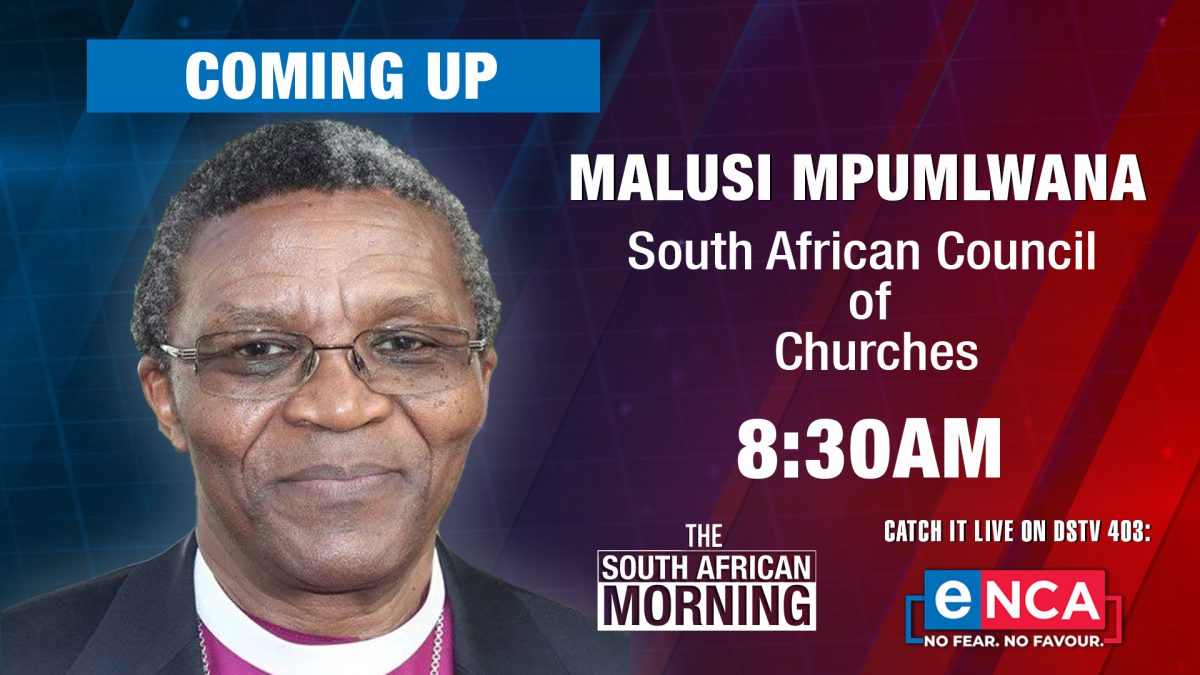
To kick-start this National Indaba process, we invite all interested parties who are impacted and affected in this matter, to submit their proposals in writing to [email protected] at the SACC for the attention of the Secretariat of the National Indaba on Non-South African Persons in our Society and Economy, which serves under the guidance of Bishop Malusi Mpumlwana.
Our request is that these public submissions must be solution-focused, aimed at presenting their recommendations for how these challenges should be resolved in the short and long-term. This includes all those individuals who may have previously used different channels to share their thinking; we invite them to re-submit their thoughts through this formal process.
We would appeal that these submissions be made on or by: 31 March 2022.
During the weeks ahead in March, these submissions will be analysed, processed and collated, and where greater clarity is needed, the authors of these proposals may be engaged by the Secretariat to clarify their proposals, for better understanding of their issues.
Looking ahead into April and May, a series of direct conversations will be conducted with some of the parties that have made these submissions; and the categorisation of their submissions will inform the series of cluster engagements that will be held with the various categories of people and organisations that have submitted their positions.
Special engagement sessions will also be conducted with various organisations such as community based organisations that may be relevant; labour and employer organisations; small business and vendor organisations; organised organisations of non-South Africans; as well various government departments.
Throughout this process, a research unit will focus on gathering relevant information and verifying claims made in the various submissions.
Research will also be initiated regarding the viability or feasibility of proposed solutions, for the benefit of the dialogue process.
These engagement sessions will culminate in a broad forum of representatives of the participating and interested parties, where a presentation of the body of views will be made for a solutions dialogue.
This forum has been earmarked for 21-23 June 2022.
We are cognisant of the fact that our efforts will require multi-stakeholder support and we are open to receiving this support in its various forms from both public and private sponsors, who are welcome to contact the National Indaba Secretariat in this regard.
Finally, we understand that this National Indaba process must be accompanied by an acceleration of other nation-building ingredients that include far-reaching economic transformation, because without the broader agenda that satisfies the deeper needs of the people, any dialogue will soon lose steam as an idle talk-shop. For this reason, the SACC has started the Initiative for Economic Transformation for the
Excluded Majority, with a panel of a dozen economists and thinkers working to investigate options for an economic architecture that best includes the Excluded Majority in the current urgent need for economic transformation for inclusive growth; and to wrestle with the question of what are the sectors of the economy that have the greatest potential to draw into productive participation the largest number of excluded people in the shortest period of time. The third necessary initiative to be rolled out soon is the Nation-Building Initiative of Healing & Reconciliation for a Common Identity – the “One Identity South Africa” campaign.
Photo: Unsplash